The post For_Res. Management options to promote forest resistance to multiple threats. Ministerio de Ciencia, Innovación y Universidades (MICINN, RTI2018-098778-B-I00 ). 2019-2021 first appeared on Ecology and management of silvopastoral systems.
]]>
 Funding Agency: Programa Estatal de Investigación, Desarrollo e Innovación Orientada a los Retos de la Sociedad (MICINN, SPAIN)
Participating organizations: CTFC
Duration, from: 2019 to: 2021
PI: Piqué M., Casals P.
Subproject Researchers: Dr. Jordi Camprodon; David Guixé; Mario Beltran
Project goals:
The post For_Res. Management options to promote forest resistance to multiple threats. Ministerio de Ciencia, Innovación y Universidades (MICINN, RTI2018-098778-B-I00 ). 2019-2021 first appeared on Ecology and management of silvopastoral systems.
]]>The post Est_Res. Response strategies of Mediterranean woodlands to natural or anthropogenic disturbances. Ministerio de Economía y Competitividad (MINECO, AGL2015-70425-R). 2016-2018 first appeared on Ecology and management of silvopastoral systems.
]]>
 Funding Agency: Programa Estatal de Investigación, Desarrollo e Innovación Orientada a los Retos de la Sociedad (MINECO, SPAIN)
Participating organizations: CTFC
Duration, from: 2016 to: 2018
PI: Coll Ll., Casals P.
Subproject Researchers: Dr. Pere Rovira; Dra. Miriam Piqué; Dr. Jordi Garcia-Pausas; Dr. Aitor Ameztegui; Dr. John-William Shipley
Project goals:
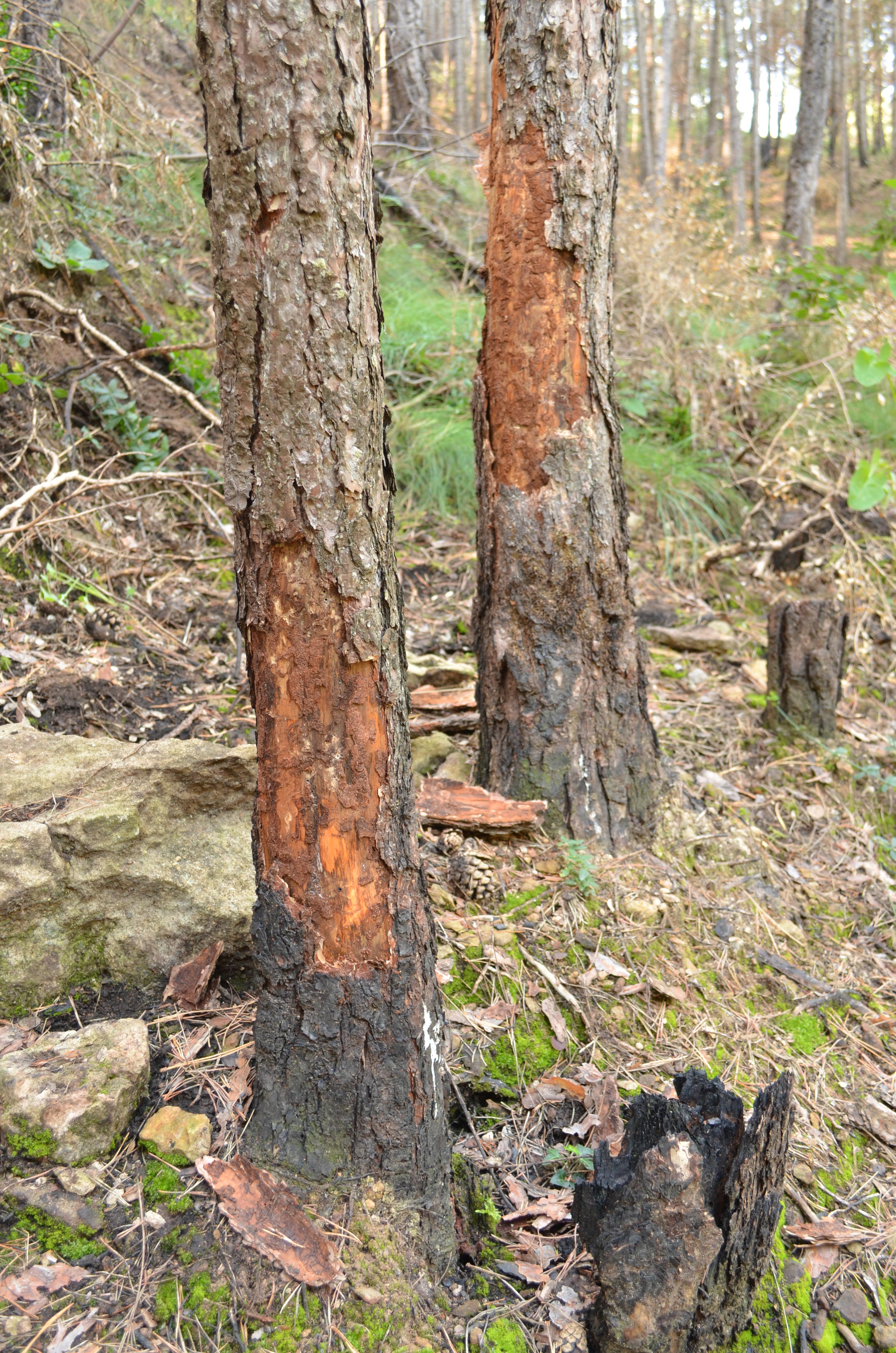
Climate change is expected to intensify the disturbance regime to which Mediterranean woodlands will be exposed. In this context, the implementation of management strategies oriented to enhance the adaptability of these systems to change is increasingly considered by forest agencies. In general, promoting the structural and compositional heterogeneity of forests stands is considered to increase their resilience face to disturbances. However, there is still few understanding on how the climatic and land-use changes (increasing temperature and drought, forest densification) can modulate the capacity of forest species to respond to disturbances. EST_RES aims at advancing in the comprenhension of the role of different environmental factors and the type of disturbance on the expression of response-strategies in Submediterranean woody species. Because the relative abundance of sprouting species is predicted to increase in these ecosystems, EST_RES will particularly focus on this response-strategy analyzing the main drivers of its expresion and the consequences for some key attributes of the soil.
Specific objectives of EST_RES are:
§ To contribute to discern the drivers of resprouting vigor of Submediterranean woody species
§ To characterise the mid-term post-fire dynamics of forest systems composed by contrasted proportions of resprouters and seeders
§ To determine the role of woody resprouting species on the dynamics of soil organic matter
§ To assess the persistence of forest stands in front to perturbations of forest stands with different composition of response strategies.
EST_RES will develop an interdisciplinary and multi-scale approach, with experiments in natural and controlled conditions. It will also take advantage of experimental sites established in the context of previous projects by the researchers involved on it. Finally the project will use all the knowledge gathered in these activities (together with existing bibliographic information) to develop indicators of forest persistence based on the structural and compositional characteristics of the stands useful for forest managers.
Related Papers:
Casals P, Valor T, Rios A I, Shipley B. 2018 Leaf and bark functional traits predict resprouting strategies of understory woody species after prescribed fires. For.Ecol.Manage. 429, 158-174.
Casals P, Rios AI. 2018. Burning intensity and low light availability reduce resprouting ability and vigor of Buxus sempervirens L. after clearing. Sci. Total Environ. 627c, 403-416
Valor T, Casals P, González-Olabarria JR, Piqué M, Battipaglia G. 2018. Disentangling the effects of crown scorch and competition release on the physiological and growth response of Pinus halepensis Mill using δ13C and δ18O isotopes. For. Ecol. Manage. 424, 276-287
Valor T, González-Olabarria JR, Piqué M, Casals P. 2017. The effects of burning season and severity on the mortality over time of Pinus nigra ssp. salzmannii (Dunal) Franco and P. sylvestris L. For. Ecol. Manage. doi:10.1016/j.foreco.2017.08.027
Valor T, Ormeño E, Casals P. 2017. Temporal effects of prescribed burning on terpene production in Mediterranean pines. Tree Physiology, doi:10.1093/treephys/tpx069
KEY WORDS: response traits, resilience, fire, mixed-forests, resprouting, post-disturbance dynamics, soil function


The post Est_Res. Response strategies of Mediterranean woodlands to natural or anthropogenic disturbances. Ministerio de Economía y Competitividad (MINECO, AGL2015-70425-R). 2016-2018 first appeared on Ecology and management of silvopastoral systems.
]]>The post ForBurn. Forest understory Prescribed burnings: effectiveness and constraints. Ministerio de Economía y Competitividad (MINECO, AGL2012-40098-CO3-00). 2012-2015 first appeared on Ecology and management of silvopastoral systems.
]]>

Funding Agency: Ministerio de Economía y Competitividad. Gobierno de España
Participating organizations: CTFC, Universidad de la Laguna, Universitat de Barcelona
Duration, from: : 2013 to: 2015
PI: Casals P.
Subproject Researchers: Ríos AI, Taull M, Mora A, Piqué M (AGS), Valor T (AGS), Beltrán M (AGS), González-Olabarria JR (FidBosc)
Project goals:
The ultimate goal of this integrated project is to advance in scientific knowledge to better accommodate prescription windows to successfully implement understory forest burns to both achieve the management objectives and minimize ecosystem damages. The global objectives of FORBURN are:
- To contribute to the comprehensive understanding of burning-driven mechanisms that affect both different pine species, mid-term tree vitality, and forest understory composition and structure.
- To analyze the short-term effects of under burning on soil fertility and some key biotic components of soil
- To analyze the regeneration and functional composition of shrubs and their spatial structure
- To customize fuel models at stand and landscape scales based on different management scenarios under a forest fire prevention scope.
This integrated project (first and second sub-projects) will elucidate mechanisms at the plant functional group level to understand the effects of prescribed burnings on the dominant plants in two different biogeographic and climate regions: Mediterranean and Macaronesian regions. In both, the project will analyze the medium-term (5-10 years) fire effects on both tree vigor and understory structure (in sample plots from 2002 to 2011). Additionally, in both regions we will perform experimental burns under tree canopy to reveal the possible mechanisms derived by short-term fire effects under contrasting conditions of fireline intensity (low and moderate) and two different plant physiological stages ( late fall and early spring).
The project’s findings on the effectiveness and constraints of burning forests will provide an enhancement in both forest management and fuel management to lessen todays’ wildland fire problem. Some representatives of these sectors have already shown a deep interest in this integrated project.
Related Papers:
Valor T, González-Olabarria JR, Piqué M, Casals P. 2017. The effects of burning season and severity on the mortality over time of Pinus nigra ssp. salzmannii (Dunal) Franco and P. sylvestris L. For. Ecol. Manage. doi:10.1016/j.foreco.2017.08.027
Valor T, Ormeño E, Casals P. 2017. Temporal effects of prescribed burning on terpene production in Mediterranean pines. Tree Physiology, doi:10.1093/treephys/tpx069
Casals P, Valor T, Besalú A, Molina D. 2016. Understory fuel load and structure eight to nine years after prescribed burning in Mediterranean pine forests. Forest Ecology and Management, 362:156-168
Valor T, González-Olabarria JR, Piqué M. 2015. Assessing the impact of prescribed burning on the growth of four European pines. Forest Ecology and Management, 343: 101-109


The post ForBurn. Forest understory Prescribed burnings: effectiveness and constraints. Ministerio de Economía y Competitividad (MINECO, AGL2012-40098-CO3-00). 2012-2015 first appeared on Ecology and management of silvopastoral systems.
]]>The post VULCA. Vulnerability of soil carbon in front of Global Change in grassland ecosystems: Effects of changes in rainfall regime in abandoned or burnt grasslands. Ministerio de Educación y Ciencia. 2006-2008. first appeared on Ecology and management of silvopastoral systems.
]]> Title: VULCA. Vulnerabilidad del C edáfico al cambio climático y de uso del suelo en ecosistemas pastorales: Efectos del cambio en el regimén de precipitación en pastos abandonados o quemados.
Funding Agency: Ministerio de Educación y Ciencia
Participating organizations: CEAM, UV
Duration: 2006-2008
PI: Casals P
Subproject Researchers: Rovira P; Montané, F; Lopez-Sangil, L.
The aim of the project is to study the vulnerability of soil carbon in grassland systems, by means of studying the changes in soil carbon processes under different land uses and under Climatic Change scenarios. To do this, the project includes 3 sub-projects, designed to study fluxes of carbon in soil-plant systems (sub-project 1), fluxes between the ecosystem and the atmosphere (sub-project 2) and its extrapolation to a landscape scale (sub-project 3).
The objectives of the coordinated project are:
1. To measure how relevant are in the carbon cycle of grasslands the abiotic factors (temperature and humidity) and the biotic factors (plant biomass, organic matter quality).
2. To estimate the carbon fluxes to the atmosphere, to the passive fractions of soil organic matter, or to soluble C (DOC), as affected by changes in the rainfall regime, fires or land abandonment.

Related Papers:
Montané F, Casals P, Dale MRT, 2011. How spatial heterogeneity of cover affects patterns of shrub encroachment into mesic grasslands. PLoS ONE, in press.
Casals P, Lopez-Sangil L, Carrara A, Gimeno C, Nogués S, 2011. Autotrophic and heterotrophic contributions to short-term soil CO2 efflux following simulated summer precipitation pulses in a Mediterranean dehesa. Global Biogeochemical Cycles, 25, GB 3012, doi:10.1029/2010GB003973
Lopez-Sangil L, Rousk J, Wallander H, Casals P, 2011. Microbial growth measurements reveal that land-use abandonment promotes a fungal dominance of SOM decomposition in grazed Mediterranean ecosystems. Biology and Fertility of Soils, 47, 129–138 doi: 10.1007/s00374-010-0510-8
Casals P, Garcia-Pausas J, Montané F, Romanyà J, Rovira P, 2010 Root decomposition in grazed and abandoned Mediterranean and mountain grasslands estimated by standard labelled roots. Agriculture, Ecosystems and Environment, 139, 759-765
Montané F, Romanyà J, Rovira P, Casals P. 2010. Aboveground litter quality changes may drive soil organic carbon increase after shrub encroachment into mountain grasslands. Plant and Soil, 337, 151-165. Doi: 10.1007/s11104-010-0512-1
Montané F, Casals P, Dale MRT. 2010. Spatial patterns of shrub encroachment in neighbouring grassland communities in the Pyrenees: floristic composition heterogeneity drives shrub proliferation rates. Plant Ecology, 211, 267-278 Doi: 10.1007/s11258-010-9788-8
Casals P, Gimeno C, Carrara A, Lopez-Sangil L, Sanz MJ. 2009. Soil CO2 efflux and extractable organic carbon fractions under simulated precipitation events in a Mediterranean Dehesa. Soil Biology and Biochemistry, 41: 1915-1922.
Montané F, Casals P, Taull M, Lambert B, Dale M R T, 2009. Spatial patterns of shrub cover after different fire disturbances in the Pyrenees. Annals of Forest Science, 66:612
Montané F, Rovira P, Casals P. 2007. Shrub encroachment into mesic mountain grasslands in the Iberian peninsula: Effects of plant quality and temperature on soil C and N stocks. Global Biogeochemical Cycles, 21, doi:10.1029/2006GB002853
The post VULCA. Vulnerability of soil carbon in front of Global Change in grassland ecosystems: Effects of changes in rainfall regime in abandoned or burnt grasslands. Ministerio de Educación y Ciencia. 2006-2008. first appeared on Ecology and management of silvopastoral systems.
]]>The post SILPAS. Trees as drivers of silvopastoral system function in the Neotropics. Research Council of Norway. 2008-2011. first appeared on Ecology and management of silvopastoral systems.
]]> Title: Trees as drivers of silvopastoral system function in the Neotropics. SILPAS
Funding Agency: Research Council of Norway. Env. 2015 programme Land- Grant 184065/S30
Participating organizations: Norwegian Institute for Nature Research (NINA), Centro Agronómico Tropical de Investigación y Enseñanza (CATIE)
Researchers: Pere Casals
2008-2011
The silvopastoral system is a livestock production option that involves the interaction of woody plants (shrubs and trees), herbaceous fodder plants and the different species of domestic herbivores with the aim to maximise sustainable production of animal commodities, meat, milk, wool etc. There is also an increasing amount of evidence that silvopastoral systems (multi-strata live fences and pastures with high (> 20% cover) tree densities have important conservation value. Despite these advantages, the adoption of well-functioning silvopastoral systems in the sub-humid Neotropics is limited. There is generally poor knowledge about the ecological functioning of silvopastoral systems in the sub-humid Neotropics which limits the formulation of management practices that can ensure ecological and economical sustainability at the farm and regional level, harmonising food production systems with environmental and biodiversity preservation.
Trees contribute directly to the production of silvopastoral farms through their effect on animal well-being and the supply of feed in critical periods of forage production. However, there is a need for a better understanding of how silvopastoral systems with different tree structure affects productivity of pastures around the year, and the extent to which trees contribute in buffering a reduction of production, by producing fruits and fodder.
SILPAS studies the silvopastoral system in Central America with a focus on trees as drivers of fundamental ecological processes with a bearing on the success in the adoption of the silvopastoral practice in the region. Specifically, the project will: 1. Establish the structure of silvopastoral farms (e.g. amount and type of tree cover, composition of tree and pasture species, farm and paddock size) along climate and topography gradients. 2. Assess the effects of tree cover structure and composition in interplay with livestock behaviour on spatial patterns of i) soil nutrient content, ii) the composition (species and attributes) and forage quality of the herbaceous vegetation, ii) temporal patterns of primary productivity. 3. Quantify the seasonal contribution of trees to the diet of livestock. 4. Scale up the magnitude and quality of processes at the pasture level (under 2 and 3) to the farm level according to the farm structure identified under 1. 4. Develop recommendations about silvopastoral farm tree cover.
Selected Papers:
Rusch GM, Zapata PC, Casanoves F, Casals P, Ibrahim M, DeClerk F. 2014. Determinants of grassland primary production in seasonally-dry silvopastoral systems in Central America. Agroforestry Systems 88(3), 517-526
Casals P, Romero J, Rusch G, Ibrahim M. 2014. Soil organic C and nutrient contents under trees with different functional characteristics in seasonally dry tropical silvopastures. Plant and Soil 374 (1), 643-659
Bucheli P, Benjamín T, Rusch GM, Ibrahim M, Casals P, Pugnaire F, 2013. Estrategias de los árboles en sistemas silvopastorales en el uso eficiente del agua y la tolerancia a la sequía, In Sánchez D, Villanueva C, Rusch GM, Ibrahim M, DeClerck (eds.) Estado del recurso arbóreo en fincas ganaderas y su contribución en la sostenibilidad de la producción en Rivas. Nicaragua. Pp. 25 – 30. Serie técnica. Boletín técnico/CATIE; nº60. ISBN: 978-9977-57-593-3, Turrialba, Costa Rica.
Rusch GM, Zapata P, Casals P, Romero J, Sauceda M, Morales J, DeClerck F, 2013. Relación de la cobertura arbórea con la disponibilidad de pasto , In Sánchez D, Villanueva C, Rusch GM, Ibrahim M, DeClerck (eds.) Estado del recurso arbóreo en fincas ganaderas y su contribución en la sostenibilidad de la producción en Rivas. Nicaragua. Pp. 31 – 35. Serie técnica. Boletín técnico/CATIE; nº60. ISBN: 978-9977-57-593-3, Turrialba, Costa Rica.
The post SILPAS. Trees as drivers of silvopastoral system function in the Neotropics. Research Council of Norway. 2008-2011. first appeared on Ecology and management of silvopastoral systems.
]]>The post CronoCarb. Captura de carbono en suelos agricolas reforestados: estabilizacion del C capturado por proteccion fisica. Ministerio de Educación y Ciencia. 2010-2013. first appeared on Ecology and management of silvopastoral systems.
]]> Title:Captura de carbono en suelos agricolas reforestados: estabilizacion del C capturado por proteccion fisica (CronoCarb). AGL2009-13400-C05-01
Funding Agency: Ministerio de Educación y Ciencia
Participating organizations:
Duration, from: 2010 to: 2013
PI: Rovira P
Subproject Researchers: Casals P.
Carbon sequestration in soils and vegetation is an interesting way for decreasing the impact of Climate Change driven by the increasing atmospheric CO2 levels. The potential for carbon sequestration in Spain is assumed to be very high. The reason is the abbandonment of agricultural activites, resulting in a widespread release of old agricultural fields which in this way have become prone to act as carbon sinks. An experimental quantification of the C sequestration rates is only possible by means of Eddy-Covariance techniques, or through the study of chronosequences of land use change. Both approaches are slow and expensive; as a consequence, for Spain there is little field information (the most credible one) about how the C stocks in old agricultural soils are really changing as a result of their conversion to forest soils. CRONOCARB aims to substantially increase the amounf of field information available, through the study of a big number of afforestation chronosequences, throughout the spanish territory. Owing to the variety in climate, soil and tree species, it is not possible to cover all the possible situations, but it should be possible to obtain data for the most common ones. In addition to merely studying the accumulation of C in soil and vegetation, we aim to study also the changes in soil chemical fertility, the degree of stabilisation of the sequestered C, and the physical and chemical processes that result in such a stabilisation. The final aim of the project is to deliver a predictive model for C sequestration, based on the calibration of already existing models, and useful also for situations not directly studied in this research project.
The post CronoCarb. Captura de carbono en suelos agricolas reforestados: estabilizacion del C capturado por proteccion fisica. Ministerio de Educación y Ciencia. 2010-2013. first appeared on Ecology and management of silvopastoral systems.
]]>The post GHG-Europe. Greenhouse gas management in European land use systems. European Comission. EU-RTD integrated project. VII FP. 2010-2013. first appeared on Ecology and management of silvopastoral systems.
]]> Title: Greenhouse gas management in European land use systems. GHG-Europe. FP7-ENV-2009-1.
Funding Agency: European Comission. EU-RTD integrated project. VII FP
Participating organizations: CTFC; CEAM between others
Duration: 2010-2013.
PI: Dr. Annette Freibauer, Johann Heinrich von Thünen Institute (VTI), Germany
Subproject Researchers: Casals P.; Rovira P; Romanyà J; Lopez-Sangil, L; Montané F; Martí-Roura, M.
Web address: http://www.ghg-europe.eu/.
Summary: The GHG-Europe project aims to improve our understanding and capacity for predicting the European terrestrial carbon and greenhouse gas budget. In the view of climate change it is crucial to know the amount of GHGs released into the atmosphere by anthropogenic activities. But also natural drivers such as climate variability influence the GHG balance of European ecosystems. The objective of WP2 (Critical processes), is to provide full C and CO2, N2O and CH4 (GHG) budgets of European major ecosystem types at annual to decadal time scales and to quantify the response and vulnerability of terrestrial ecosystems to anthropogenic and natural drivers focusing on critical processes for GHG fluxes based on best available observational evidence. Process studies that utilize long-term C and GHG observations, ecosystem manipulations, factorial experiments and gradients of climate, land use and management intensity will elucidate the reaction of C and GHG processes to changes in anthropogenic and natural drivers.
Shrublands cover large parts of the Mediterranean with considerable enlargement in some regions by woody encroachments but this ecosystem has been completely ignored in the European C bugdet (Schulze et al. 2008) although it may act as a significant C sink (Pacala et al. 2001). Our research activity (Task 2.6) focus on provide data and process understanding of Mediterranean shrubland management and woody encroachment dynamics for a better representation of shrublands in process-based models for European GHG balances.
Related Papers:
Casals P, Lopez-Sangil L, Carrara A, Gimeno C, Nogués S, 2011. Autotrophic and heterotrophic contributions to short-term soil CO2 efflux following simulated summer precipitation pulses in a Mediterranean dehesa. Global Biogeochemical Cycles, 25, GB 3012, doi:10.1029/2010GB003973
Martí-Roura M, Casals P, Romanyà J, 2011. Temporal changes in soil organic C under Mediterranean shrublands and grasslands: Impact of fire and drought. Plant and Soil, 338, 289-300 doi: 10.1007/s11104-010-0485-0
Lopez-Sangil L, Rousk J, Wallander H, Casals P, 2011. Microbial growth measurements reveal that land-use abandonment promotes a fungal dominance of SOM decomposition in grazed Mediterranean ecosystems. Biology and Fertility of Soils, 47, 129–138 doi: 10.1007/s00374-010-0510-8
Casals P, Garcia-Pausas J, Montané F, Romanyà J, Rovira P, 2010 Root decomposition in grazed and abandoned Mediterranean and mountain grasslands estimated by standard labelled roots. Agriculture, Ecosystems and Environment, 139, 759-765
Montané F, Romanyà J, Rovira P, Casals P. 2010. Aboveground litter quality changes may drive soil organic carbon increase after shrub encroachment into mountain grasslands. Plant and Soil, 337, 151-165. Doi: 10.1007/s11104-010-0512-1
Montané F, Casals P, Dale MRT. 2010. Spatial patterns of shrub encroachment in neighbouring grassland communities in the Pyrenees: floristic composition heterogeneity drives shrub proliferation rates. Plant Ecology, 211, 267-278 Doi: 10.1007/s11258-010-9788-8
The post GHG-Europe. Greenhouse gas management in European land use systems. European Comission. EU-RTD integrated project. VII FP. 2010-2013. first appeared on Ecology and management of silvopastoral systems.
]]>