The post Pere Casals first appeared on Ecology and management of silvopastoral systems.
]]>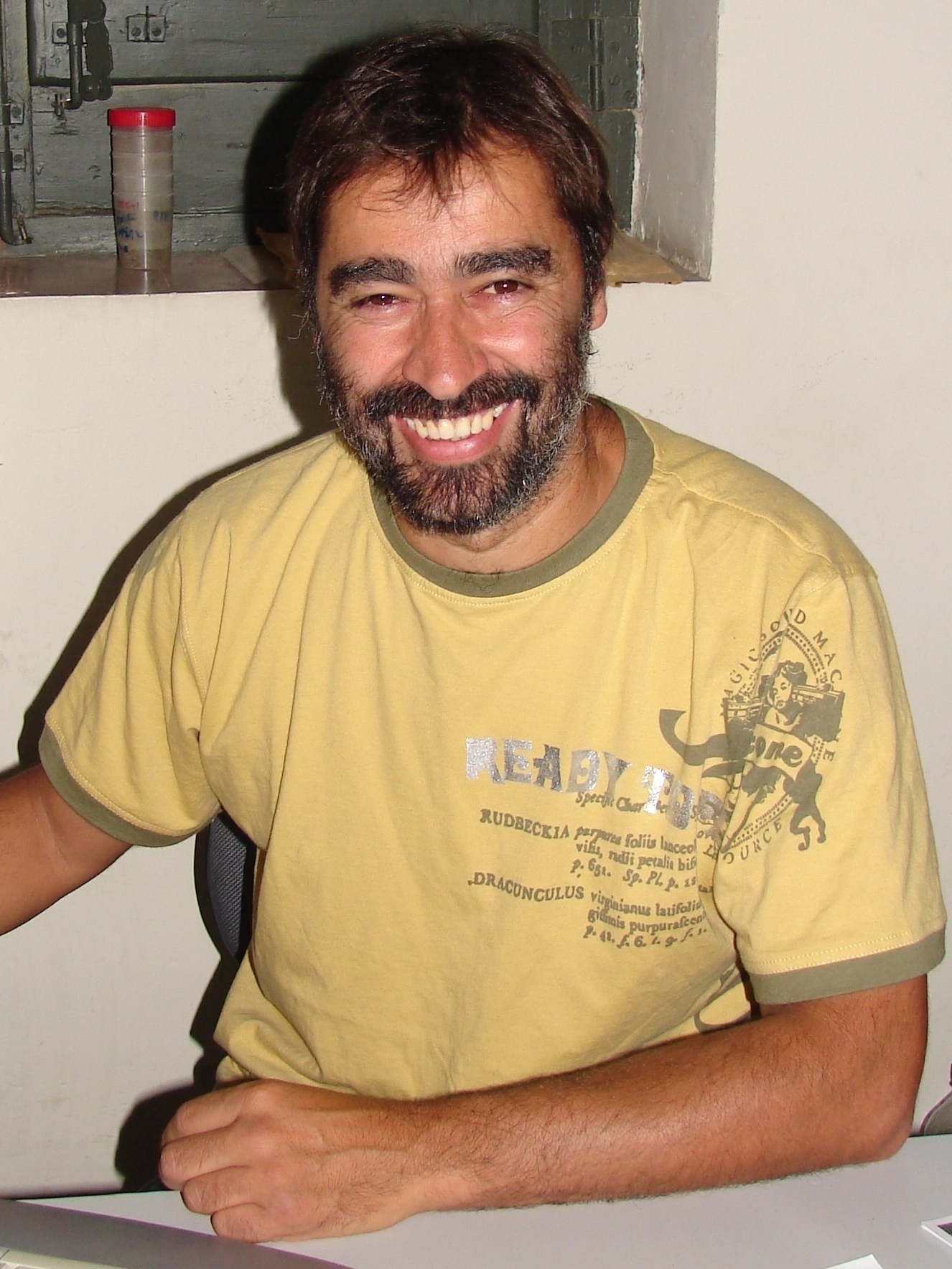
Dr. Pere Casals Tortras.
Certification of scientific productivity and science and transfer activity for the program I3 (Agencia Nacional de Evaluación)
Specialist in plant and soil relationships in agrosilvopastoral systems. With a background in plant and soil sciences, I have a PhD in the University of Barcelona addressing plant and soil N dynamics after prescribed fires. Broad experience in studying soil nutrient cycling and organic matter changes as affected by fire and afforestation. Skills using 13C, 14C and 15N as a soil and plant tracers and soil C fractionation. Involved in research projects assessing the effects forest management, land-use and climate changes on plant and soil relationships.
In order to contribute to a sustainable management of agrosilvopastoral systems, my research interest focuses on the effects of management derived perturbations (i.e. prescribed fires, grazing) or land use and climate stresses (i.e. land abandonment, drought, temperature increase) on plant dynamics, nutrient cycling and organic C stocks and fluxes. At the present I am full-time researcher at the Forest Sciences Centre of Catalonia, working to contribute to the comprehensive understanding of burning-driven mechanisms that determine functional shrub composition and structure and key components of soil.
Selected Papers:
Casals P, Valor T, Rios A I, Shipley B. 2018 Leaf and bark functional traits predict resprouting strategies of understory woody species after prescribed fires. For.Ecol.Manage. 429, 158-174.
Casals P, Rios AI. 2018. Burning intensity and low light availability reduce resprouting ability and vigor of Buxus sempervirens L. after clearing. Sci. Total Environ. 627c, 403-416
Casals P, Valor T, Besalú A, Molina-Terrén D 2016. Understory fuel load and structure eight to nine years after prescribed burning in Mediterranean pine forests. For. Ecol. Manage. 362, 156-168
Casals P, Lopez-Sangil L, Carrara A, Gimeno C, Nogués S, 2011. Autotrophic and heterotrophic contributions to short-term soil CO2 efflux following simulated summer precipitation pulses in a Mediterranean dehesa. Global Biogeochemical Cycles, 25, GB 3012, doi:10.1029/2010GB003973
Casals P, Garcia-Pausas J, Montané F, Romanyà J, Rovira P, 2010. Root decomposition in grazed and abandoned Mediterranean and mountain grasslands estimated by standard labelled roots. Agriculture, Ecosystems and Environment, 139: 759-765
Casals P, Baiges T, Bota G, Chocarro C, de Bello F, Fanlo R, Sebastià MT, Taull M. 2009. Silvopastoral systems in the Northeastern Iberian Peninsula. A Multifunctional Perspective. In: Rigueiro-Rodríguez A, McAdam JH, Mosquera-Losada MR (Eds) Agroforestry in Europe: Current Status and Future Prospects. Springer-Berlag. ISBN 978-1-4020-8271-9, Cap. 9, pp. 161-181
Casals P, Gimeno C, Carrara A, Lopez-Sangil L, Sanz MJ. 2009. Soil CO2 efflux and extractable organic carbon fractions under simulated precipitation events in a Mediterranean Dehesa. Soil Biology and Biochemistry, 41: 1915-1922.
Casals P, Romanya J, Vallejo VR 2005. Short-term N2 fixation by legume seedlings and resprouts after fire in Mediterranean old-fields. Biogeochemistry, 76(3) : 477- 501
The post Pere Casals first appeared on Ecology and management of silvopastoral systems.
]]>The post VULCA. Vulnerability of soil carbon in front of Global Change in grassland ecosystems: Effects of changes in rainfall regime in abandoned or burnt grasslands. Ministerio de Educación y Ciencia. 2006-2008. first appeared on Ecology and management of silvopastoral systems.
]]> Title: VULCA. Vulnerabilidad del C edáfico al cambio climático y de uso del suelo en ecosistemas pastorales: Efectos del cambio en el regimén de precipitación en pastos abandonados o quemados.
Funding Agency: Ministerio de Educación y Ciencia
Participating organizations: CEAM, UV
Duration: 2006-2008
PI: Casals P
Subproject Researchers: Rovira P; Montané, F; Lopez-Sangil, L.
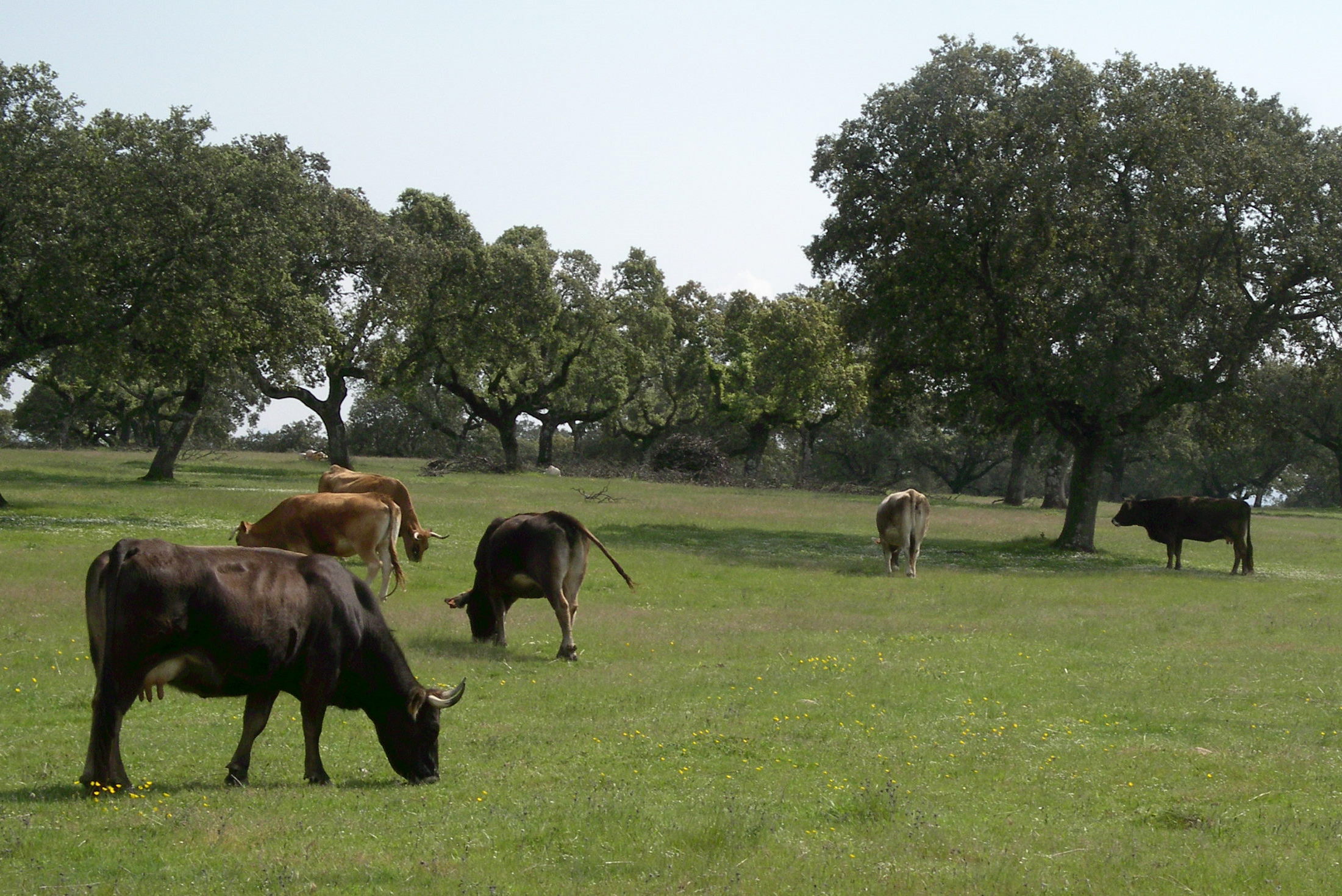
The aim of the project is to study the vulnerability of soil carbon in grassland systems, by means of studying the changes in soil carbon processes under different land uses and under Climatic Change scenarios. To do this, the project includes 3 sub-projects, designed to study fluxes of carbon in soil-plant systems (sub-project 1), fluxes between the ecosystem and the atmosphere (sub-project 2) and its extrapolation to a landscape scale (sub-project 3).
The objectives of the coordinated project are:
1. To measure how relevant are in the carbon cycle of grasslands the abiotic factors (temperature and humidity) and the biotic factors (plant biomass, organic matter quality).
2. To estimate the carbon fluxes to the atmosphere, to the passive fractions of soil organic matter, or to soluble C (DOC), as affected by changes in the rainfall regime, fires or land abandonment.

Related Papers:
Montané F, Casals P, Dale MRT, 2011. How spatial heterogeneity of cover affects patterns of shrub encroachment into mesic grasslands. PLoS ONE, in press.
Casals P, Lopez-Sangil L, Carrara A, Gimeno C, Nogués S, 2011. Autotrophic and heterotrophic contributions to short-term soil CO2 efflux following simulated summer precipitation pulses in a Mediterranean dehesa. Global Biogeochemical Cycles, 25, GB 3012, doi:10.1029/2010GB003973
Lopez-Sangil L, Rousk J, Wallander H, Casals P, 2011. Microbial growth measurements reveal that land-use abandonment promotes a fungal dominance of SOM decomposition in grazed Mediterranean ecosystems. Biology and Fertility of Soils, 47, 129–138 doi: 10.1007/s00374-010-0510-8
Casals P, Garcia-Pausas J, Montané F, Romanyà J, Rovira P, 2010 Root decomposition in grazed and abandoned Mediterranean and mountain grasslands estimated by standard labelled roots. Agriculture, Ecosystems and Environment, 139, 759-765
Montané F, Romanyà J, Rovira P, Casals P. 2010. Aboveground litter quality changes may drive soil organic carbon increase after shrub encroachment into mountain grasslands. Plant and Soil, 337, 151-165. Doi: 10.1007/s11104-010-0512-1
Montané F, Casals P, Dale MRT. 2010. Spatial patterns of shrub encroachment in neighbouring grassland communities in the Pyrenees: floristic composition heterogeneity drives shrub proliferation rates. Plant Ecology, 211, 267-278 Doi: 10.1007/s11258-010-9788-8
Casals P, Gimeno C, Carrara A, Lopez-Sangil L, Sanz MJ. 2009. Soil CO2 efflux and extractable organic carbon fractions under simulated precipitation events in a Mediterranean Dehesa. Soil Biology and Biochemistry, 41: 1915-1922.
Montané F, Casals P, Taull M, Lambert B, Dale M R T, 2009. Spatial patterns of shrub cover after different fire disturbances in the Pyrenees. Annals of Forest Science, 66:612
Montané F, Rovira P, Casals P. 2007. Shrub encroachment into mesic mountain grasslands in the Iberian peninsula: Effects of plant quality and temperature on soil C and N stocks. Global Biogeochemical Cycles, 21, doi:10.1029/2006GB002853
The post VULCA. Vulnerability of soil carbon in front of Global Change in grassland ecosystems: Effects of changes in rainfall regime in abandoned or burnt grasslands. Ministerio de Educación y Ciencia. 2006-2008. first appeared on Ecology and management of silvopastoral systems.
]]>