The post For_Res. Management options to promote forest resistance to multiple threats. Ministerio de Ciencia, Innovación y Universidades (MICINN, RTI2018-098778-B-I00 ). 2019-2021 first appeared on Ecology and management of silvopastoral systems.
]]>
 Funding Agency: Programa Estatal de Investigación, Desarrollo e Innovación Orientada a los Retos de la Sociedad (MICINN, SPAIN)
Participating organizations: CTFC
Duration, from: 2019 to: 2021
PI: Piqué M., Casals P.
Subproject Researchers: Dr. Jordi Camprodon; David Guixé; Mario Beltran
Project goals:
The post For_Res. Management options to promote forest resistance to multiple threats. Ministerio de Ciencia, Innovación y Universidades (MICINN, RTI2018-098778-B-I00 ). 2019-2021 first appeared on Ecology and management of silvopastoral systems.
]]>The post Est_Res. Response strategies of Mediterranean woodlands to natural or anthropogenic disturbances. Ministerio de Economía y Competitividad (MINECO, AGL2015-70425-R). 2016-2018 first appeared on Ecology and management of silvopastoral systems.
]]>
 Funding Agency: Programa Estatal de Investigación, Desarrollo e Innovación Orientada a los Retos de la Sociedad (MINECO, SPAIN)
Participating organizations: CTFC
Duration, from: 2016 to: 2018
PI: Coll Ll., Casals P.
Subproject Researchers: Dr. Pere Rovira; Dra. Miriam Piqué; Dr. Jordi Garcia-Pausas; Dr. Aitor Ameztegui; Dr. John-William Shipley
Project goals:
Climate change is expected to intensify the disturbance regime to which Mediterranean woodlands will be exposed. In this context, the implementation of management strategies oriented to enhance the adaptability of these systems to change is increasingly considered by forest agencies. In general, promoting the structural and compositional heterogeneity of forests stands is considered to increase their resilience face to disturbances. However, there is still few understanding on how the climatic and land-use changes (increasing temperature and drought, forest densification) can modulate the capacity of forest species to respond to disturbances. EST_RES aims at advancing in the comprenhension of the role of different environmental factors and the type of disturbance on the expression of response-strategies in Submediterranean woody species. Because the relative abundance of sprouting species is predicted to increase in these ecosystems, EST_RES will particularly focus on this response-strategy analyzing the main drivers of its expresion and the consequences for some key attributes of the soil.
Specific objectives of EST_RES are:
§ To contribute to discern the drivers of resprouting vigor of Submediterranean woody species
§ To characterise the mid-term post-fire dynamics of forest systems composed by contrasted proportions of resprouters and seeders
§ To determine the role of woody resprouting species on the dynamics of soil organic matter
§ To assess the persistence of forest stands in front to perturbations of forest stands with different composition of response strategies.
EST_RES will develop an interdisciplinary and multi-scale approach, with experiments in natural and controlled conditions. It will also take advantage of experimental sites established in the context of previous projects by the researchers involved on it. Finally the project will use all the knowledge gathered in these activities (together with existing bibliographic information) to develop indicators of forest persistence based on the structural and compositional characteristics of the stands useful for forest managers.
Related Papers:
Casals P, Valor T, Rios A I, Shipley B. 2018 Leaf and bark functional traits predict resprouting strategies of understory woody species after prescribed fires. For.Ecol.Manage. 429, 158-174.
Casals P, Rios AI. 2018. Burning intensity and low light availability reduce resprouting ability and vigor of Buxus sempervirens L. after clearing. Sci. Total Environ. 627c, 403-416
Valor T, Casals P, González-Olabarria JR, Piqué M, Battipaglia G. 2018. Disentangling the effects of crown scorch and competition release on the physiological and growth response of Pinus halepensis Mill using δ13C and δ18O isotopes. For. Ecol. Manage. 424, 276-287
Valor T, González-Olabarria JR, Piqué M, Casals P. 2017. The effects of burning season and severity on the mortality over time of Pinus nigra ssp. salzmannii (Dunal) Franco and P. sylvestris L. For. Ecol. Manage. doi:10.1016/j.foreco.2017.08.027
Valor T, Ormeño E, Casals P. 2017. Temporal effects of prescribed burning on terpene production in Mediterranean pines. Tree Physiology, doi:10.1093/treephys/tpx069
KEY WORDS: response traits, resilience, fire, mixed-forests, resprouting, post-disturbance dynamics, soil function


The post Est_Res. Response strategies of Mediterranean woodlands to natural or anthropogenic disturbances. Ministerio de Economía y Competitividad (MINECO, AGL2015-70425-R). 2016-2018 first appeared on Ecology and management of silvopastoral systems.
]]>The post Pere Casals first appeared on Ecology and management of silvopastoral systems.
]]>
Dr. Pere Casals Tortras.
Certification of scientific productivity and science and transfer activity for the program I3 (Agencia Nacional de Evaluación)
Specialist in plant and soil relationships in agrosilvopastoral systems. With a background in plant and soil sciences, I have a PhD in the University of Barcelona addressing plant and soil N dynamics after prescribed fires. Broad experience in studying soil nutrient cycling and organic matter changes as affected by fire and afforestation. Skills using 13C, 14C and 15N as a soil and plant tracers and soil C fractionation. Involved in research projects assessing the effects forest management, land-use and climate changes on plant and soil relationships.
In order to contribute to a sustainable management of agrosilvopastoral systems, my research interest focuses on the effects of management derived perturbations (i.e. prescribed fires, grazing) or land use and climate stresses (i.e. land abandonment, drought, temperature increase) on plant dynamics, nutrient cycling and organic C stocks and fluxes. At the present I am full-time researcher at the Forest Sciences Centre of Catalonia, working to contribute to the comprehensive understanding of burning-driven mechanisms that determine functional shrub composition and structure and key components of soil.
Selected Papers:
Casals P, Valor T, Rios A I, Shipley B. 2018 Leaf and bark functional traits predict resprouting strategies of understory woody species after prescribed fires. For.Ecol.Manage. 429, 158-174.
Casals P, Rios AI. 2018. Burning intensity and low light availability reduce resprouting ability and vigor of Buxus sempervirens L. after clearing. Sci. Total Environ. 627c, 403-416
Casals P, Valor T, Besalú A, Molina-Terrén D 2016. Understory fuel load and structure eight to nine years after prescribed burning in Mediterranean pine forests. For. Ecol. Manage. 362, 156-168
Casals P, Lopez-Sangil L, Carrara A, Gimeno C, Nogués S, 2011. Autotrophic and heterotrophic contributions to short-term soil CO2 efflux following simulated summer precipitation pulses in a Mediterranean dehesa. Global Biogeochemical Cycles, 25, GB 3012, doi:10.1029/2010GB003973
Casals P, Garcia-Pausas J, Montané F, Romanyà J, Rovira P, 2010. Root decomposition in grazed and abandoned Mediterranean and mountain grasslands estimated by standard labelled roots. Agriculture, Ecosystems and Environment, 139: 759-765
Casals P, Baiges T, Bota G, Chocarro C, de Bello F, Fanlo R, Sebastià MT, Taull M. 2009. Silvopastoral systems in the Northeastern Iberian Peninsula. A Multifunctional Perspective. In: Rigueiro-Rodríguez A, McAdam JH, Mosquera-Losada MR (Eds) Agroforestry in Europe: Current Status and Future Prospects. Springer-Berlag. ISBN 978-1-4020-8271-9, Cap. 9, pp. 161-181
Casals P, Gimeno C, Carrara A, Lopez-Sangil L, Sanz MJ. 2009. Soil CO2 efflux and extractable organic carbon fractions under simulated precipitation events in a Mediterranean Dehesa. Soil Biology and Biochemistry, 41: 1915-1922.
Casals P, Romanya J, Vallejo VR 2005. Short-term N2 fixation by legume seedlings and resprouts after fire in Mediterranean old-fields. Biogeochemistry, 76(3) : 477- 501
The post Pere Casals first appeared on Ecology and management of silvopastoral systems.
]]>The post Improvement of TAXUS baccata conservation status in north-eastern Iberian Peninsula. LIFE+ TAXUS first appeared on Ecology and management of silvopastoral systems.
]]>
Specific project Web address: http://www.taxus.cat/
Funding Agency: Comisión Europea. LIFE + LIFE11 NAT/ES/711
Participating organizations: CTFC, Consorci de Llaberia, Paratge Natural de Poblet, Ajuntament de Rasquera
Duration, from: 2012 to: 2016
Project Manager: Dr. Jordi Camprodon (Biod. & Animal Conserv. Lab) y Dr. Pere Casals
Project Researchers: Ríos AI, Taull M, Guixé D. (Biod. & Animal Conserv. Lab)

The yew tree (Taxus baccata L.) is a flagship tree, one of the longest living in the world with tremendous value as cultural, natural and scientific heritage. Regarded as a unique tree in various laws of the different countries (some of its populations are known within the habitat type 9580 * Forests Mediterranean Taxus baccata) which is listed as a priority with a wide distribution in Europe and Euro-Mediterranean, its biological conservation is justified by its rare nature. It has a wide range, but small reduced population sizes wherever it appears, and it is relict, as a species more widespread during the last glaciation, but which has now been restricted to small populations isolated from each other.
In the present context of climate change, the yew is now showing evidence of regression in southwestern Europe, placing it as a vulnerable species. Human pressure due to the changing landscape of buildings and infrastructure, for its excessive use for therapeutic purposes, for livestock, the incidence of fire and logging, has also contributed to their current worrying situation.
The broad aim of this project is to contribute to the conservation of the yew (Taxus baccata) habitat in the Northeast of the Iberian peninsula. Through specific forestry actions and environmental education activities the project aims to achieve the following specific objectives:
– to ensure the recruitment of yew populations improving seed dispersal and seedling survival
– to reduce grazing damage on Taxus juveniles
– to improve adult healthy reducing inter-specific competence for light and water
– to disseminate the conservation value of Taxus and their habitat to the general public and, specifically, to the local habitants and forestry workers or shepherds
These objectives will be achieved through the close colaboration between partners: the leadership of CTFC, with three local partners, responsible for ecological conservation and management of forested areas with important yew populations. The yew habitat (type 9580 *) is proteged in seven LIC in the NE of Spain. The TAXUS project conservation actions focuses on four of those LIC areas, which represent the most significant yew populations, and additional conservation actions addressed to not well-known yew populations in the other 4 LICs.
A1. Characterisation of new yew populations and elaboration of forest and ecological inventories. Where: Alta Garrotxa (Orri, llongarriu), Cardó (Cosp), Llaberia (1 to 10)
A2. Specific project management plan for each target sites. Where: All stands of all sites
A3. Stewardship agreements with Taxus forests landowners. Where: Alta Garrotxa (Misaclòs), Llaberia (1 to 10), Cardó (Cosp)
B1. Promotion of land stewardship agreements. Where: Llaberia (1 to 10)
Conservation measures
C1. Forestry actions to improve forest structure and growing of yew populations Where: Alta Garrotxa (Orri, llongarriu, Misaclòs), Cardó (Cosp), Llaberia (1 to 10), Poblet (1 to 9)
C2. Phytosanitary treatments to reduce the incidence of Armillaria fungi Where: Alta Garrotxa (Misaclòs), Llaberia (1 to 10)
C3. Protection of Taxus juveniles against browsing damages Where: Alta Garrotxa (Misaclòs), Llaberia (1 to 10)
C4. Collection of yew seeds and seedling production Where: all areas but Poblet
C5. Creation of “in situ” yew gardens for seedling acclimatation and growing Where: Cardó (with plants from all zones but Poblet)
C6. Reinforcement of yew recruitment through seedling planting Where: all areas but Poblet
C7. Promotion of seed dispersal fauna Where: all areas but Poblet and Misaclòs
C8. Specific fuelbreak actions to reduce the risk of wildfire spread into yew populations. Where: Alta Garrotxa (Orri), Llaberia (1 to 10), Cardó (Cosp)
C9. Slope stabilitzation in areas with a high risk of soil erosion. Where: Cardó (Cosp)
C10. Recovery encroached grasslands to reduce browsing impacts on Taxus trees in Misaclòs yew forest. Where: Alta Garrotxa (Misaclòs)
C11. Conservation actions in additional yew forests or recently discovered ones in localities non addressed by the core actions of the project. Where: other areas
Monitoring and assessment measures
D.1. Monitoring of conservation actions and evaluation. Where: all project’s areas
D.2. Creation of Assessment Comité Where: all project’s areas
Public awareness measures
E.1. Logotip design
E.2. Web design and maintenance
E.3, Divulgation to general public by design, creation and delivery of leaflets
E.4. Divulgation to general public by the media
E.5. Revalorisation of yew through an itinerant exposition
E.6. Design, creation and instalation of information boards about the project goals and natural values in each project area
E.7. Design and implementation of environmental education activities specifically addressed to local students
E.8. Participation in a Technical Workshop on Forest Management conducting two field seminars about yew management and conservation
E.9. Organization of the “IV International Meeting of Yew”
E10. Edition of a “Good Practices manual” on yew forestry and conservation
E.11. Scientific-technical communications in at least two national seminars on Agroforestry
E.12. Divulgation to specialised public by writing manuscripts for peer-reviewed journals
E13. Workshops with key local stakeholders: sheperds and forestiers
E14. Layman’s report
The overall results of the project are the improvement of the conservation status of yew populations, a priority habitat for the European Union, in four of the seven LIC where this habitat is protected in the Northeastern of Spain and an increase in public awareness of the conservation significance of yew, including key stakeholders for Taxus habitats conservation.
Specifically the expected results from conservation actions will be:
– Stewardship aggreements in Rasquera, Llaberia and Misaclòs (Alta Garrotxa) with private forest owners (A3)
– Long-term (20 years) rent of at least 15 ha of yew forest in Serra de Llaberia (B1)
– A decrease in the competence for water and light of Taxus trees through a selective clearing (25-45%) of Pinus and Quercus in: Alta Garrotxa (9 ha); Serra Llaberia (15 ha); Poblet (50 ha); Cardó-Boix (8 ha) (C1).
– A reduction of the impact of the fungi Armillaria on Taxus trees in the Misaclós Taxus forest through 22 dead trees retrivial and selective branch prunning on 204 yews in Misaclòs and 225 yews in Llaberia (C2).
– A reduction of browsing damage in about 50 yew juveniles by fencing individuals or small surfaces in a total of 7 ha in Serra Llaberia and 3 ha in Misaclòs (C3).
– Production of about 10.000 Yew seedlings (C4) and nursery acclimatation (C5) for yew population reforcing through plantation of 3500 juveniles in Rasquera and Cardo-Boix localities (C6).
– Promotion of fauna seed dispersion by atracting fauna vectors through planting high-fruit production tree species; increasing the visibility of already existing fruit trees; and increasing watering points in the Orri, Llongarriu (Alta Garrotxa), Cosp (Cardó-Boix) and Llaberia localities (C7).
– The resistence of Taxus habitats to wildfire through the reduction of fuel loads in the surroundings of Taxus forests in Orri (3.5 ha), Serra de Llaberia (28 ha) and Cardó-Boix (7,2 ha).
– A reduction of soil erosion by slope stabilization in about 1ha of yew forest in Cardó-Boix site.
– A recovery of about 3 ha of shrub encroached grassland in Misaclòs site to reduce browsing damage over yew trees.
– Conservation actions on 13.5 ha of additional yew forest with current low conservation status knowledge
Finally the project foresees specific difusion and transfer actions to general public, key stakeholders and forest technicians.
Related Papers:
Casals P, Camprodon J, Caritat A, Ríos A I, Guixé D, Garcia-Marti X, Martín-Alcón S, Coll L, 2015. Forest structure of Mediterranean yew (Taxus baccata L.) populations and neighbor effects on juvenile yew performance in the NE Iberian Peninsula. Forest Systems, 24(3): e042, 10 pages
Ríos A.I., Aguila V., Guixé D., Camprodon J., Caritat A., Casals P. 2014. Water stress (δ13C) in Taxus baccata L. depends on canopy cover and basal area of the neighboring trees. IV International Yew Workshop, October, 23-25, 2014. Poblet (Spain).
Ríos A. I., García-Martí X., Guixé D., Casals P., Caritat A., Camprodon J. 2014. Producción de plántulas de Taxus baccata para el refuerzo poblacional en las principales tejedas de Catalunya. IV International Yew Workshop, October, 23-25, 2014. Poblet (Spain).


The post Improvement of TAXUS baccata conservation status in north-eastern Iberian Peninsula. LIFE+ TAXUS first appeared on Ecology and management of silvopastoral systems.
]]>The post Contribution à la mise au point d’un Modèle Intégré d’Amélioration, d’Aménagement et de Gestion Agro-sylvo-pastoraux compatible avec les Objectifs de Conservation et orienté vers les communautés vulnérables des zones périphériques du Parc National de Bou-Hedma. BouHedma first appeared on Ecology and management of silvopastoral systems.
]]> Funding Agency: Agencia Europa de Cooperación EuropeAid/131-665/L/ACT/TN
Participating organizations: CTFC, INGREF
Duration, from: : 2012 to: 2015
PI: Solano D.
Subproject Researchers: Casals P, Ríos AI, Taull M
Related papers:
Traba J, Casals P, Broto F, Camprodon J, Giralt D, Guixé D, Mechergui R, Rios A, Sales S, Taull M, Ammari Y, Solano D, Bota G. 2016. Coexistence and habitat partitioning at micro- and macro-scales of rodent species in a North African desert (Bou-Hedma National Park, Tunisia). Journal of Arid Environments 131, 46 – 58
The post Contribution à la mise au point d’un Modèle Intégré d’Amélioration, d’Aménagement et de Gestion Agro-sylvo-pastoraux compatible avec les Objectifs de Conservation et orienté vers les communautés vulnérables des zones périphériques du Parc National de Bou-Hedma. BouHedma first appeared on Ecology and management of silvopastoral systems.
]]>The post Gestió de pastures emmatades mitjançant focs prescrits o estassada (Restoration of encroached mountain pastures using prescribed burnings or mechanical clearing) first appeared on Ecology and management of silvopastoral systems.
]]>
Finançament: Conselleria d’Agricultura, Ramaderia, Pesca i Medi Natural Generalitat de Catalunya
Duració: 2012– 2013.

The post Gestió de pastures emmatades mitjançant focs prescrits o estassada (Restoration of encroached mountain pastures using prescribed burnings or mechanical clearing) first appeared on Ecology and management of silvopastoral systems.
]]>The post ForBurn. Forest understory Prescribed burnings: effectiveness and constraints. Ministerio de Economía y Competitividad (MINECO, AGL2012-40098-CO3-00). 2012-2015 first appeared on Ecology and management of silvopastoral systems.
]]>

Funding Agency: Ministerio de Economía y Competitividad. Gobierno de España
Participating organizations: CTFC, Universidad de la Laguna, Universitat de Barcelona
Duration, from: : 2013 to: 2015
PI: Casals P.
Subproject Researchers: Ríos AI, Taull M, Mora A, Piqué M (AGS), Valor T (AGS), Beltrán M (AGS), González-Olabarria JR (FidBosc)
Project goals:
The ultimate goal of this integrated project is to advance in scientific knowledge to better accommodate prescription windows to successfully implement understory forest burns to both achieve the management objectives and minimize ecosystem damages. The global objectives of FORBURN are:
- To contribute to the comprehensive understanding of burning-driven mechanisms that affect both different pine species, mid-term tree vitality, and forest understory composition and structure.
- To analyze the short-term effects of under burning on soil fertility and some key biotic components of soil
- To analyze the regeneration and functional composition of shrubs and their spatial structure
- To customize fuel models at stand and landscape scales based on different management scenarios under a forest fire prevention scope.
This integrated project (first and second sub-projects) will elucidate mechanisms at the plant functional group level to understand the effects of prescribed burnings on the dominant plants in two different biogeographic and climate regions: Mediterranean and Macaronesian regions. In both, the project will analyze the medium-term (5-10 years) fire effects on both tree vigor and understory structure (in sample plots from 2002 to 2011). Additionally, in both regions we will perform experimental burns under tree canopy to reveal the possible mechanisms derived by short-term fire effects under contrasting conditions of fireline intensity (low and moderate) and two different plant physiological stages ( late fall and early spring).
The project’s findings on the effectiveness and constraints of burning forests will provide an enhancement in both forest management and fuel management to lessen todays’ wildland fire problem. Some representatives of these sectors have already shown a deep interest in this integrated project.
Related Papers:
Valor T, González-Olabarria JR, Piqué M, Casals P. 2017. The effects of burning season and severity on the mortality over time of Pinus nigra ssp. salzmannii (Dunal) Franco and P. sylvestris L. For. Ecol. Manage. doi:10.1016/j.foreco.2017.08.027
Valor T, Ormeño E, Casals P. 2017. Temporal effects of prescribed burning on terpene production in Mediterranean pines. Tree Physiology, doi:10.1093/treephys/tpx069
Casals P, Valor T, Besalú A, Molina D. 2016. Understory fuel load and structure eight to nine years after prescribed burning in Mediterranean pine forests. Forest Ecology and Management, 362:156-168
Valor T, González-Olabarria JR, Piqué M. 2015. Assessing the impact of prescribed burning on the growth of four European pines. Forest Ecology and Management, 343: 101-109


The post ForBurn. Forest understory Prescribed burnings: effectiveness and constraints. Ministerio de Economía y Competitividad (MINECO, AGL2012-40098-CO3-00). 2012-2015 first appeared on Ecology and management of silvopastoral systems.
]]>The post Jamal Alrefai first appeared on Ecology and management of silvopastoral systems.
]]>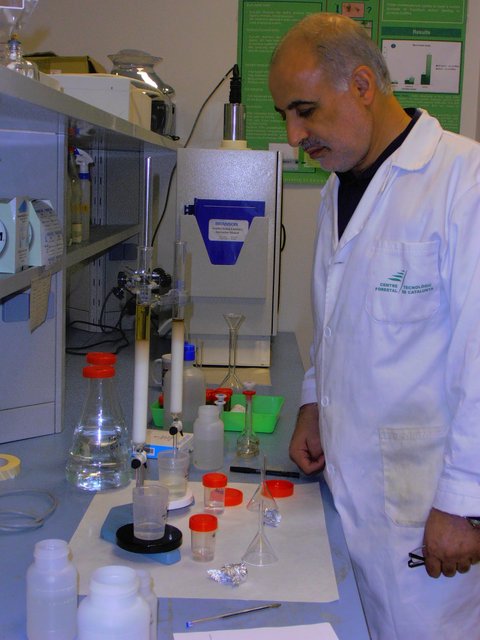 Ph.D. Chimie, Université de Strasbourg. Actualment al Petrochemicals Research Institute, KACST. Forein researcher visitor (November 2012), working on the project ‘Production of Low Modified Natural Polymers with Unique Properties”
The post Jamal Alrefai first appeared on Ecology and management of silvopastoral systems.
]]>The post Land use and climate changes effects on plant and soil C and N dynamics first appeared on Ecology and management of silvopastoral systems.
]]> Soil is the major terrestrial reservoir of C. In spite of its obvious importance, there is a lack of knowledge about how climate change and land-use change interactions affect carbon cycle. The aim of this research line is to contribute to assess the vulnerability of soil carbon stocks in silvopastoral systems, by means of understand the mechanisms underlying soil carbon processes under different land uses and climatic change scenarios.
Related Projects:
CronoCarb. Captura de carbono en suelos agricolas reforestados: estabilizacion del C capturado por proteccion fisica. Ministerio de Educación y Ciencia. 2010-2013
GHG-Europe. Greenhouse gas management in European land use systems. European Comission. EU-RTD integrated project. VII FP. 2010-2013.
VULCA. Vulnerabilidad del C edáfico al cambio climático y de uso del suelo en ecosistemas pastorales: Efectos del cambio en el régimen de precipitación en pastos abandonados o quemados. Ministerio de Educación y Ciencia. 2006-2008.
Selected related papers are:
Garcia-Pausas J, Romanyà J, Montané F, Ríos A, Taull M., Rovira P, Casals P, 2017. Are soil carbon stocks in mountain grasslands compromised by land-use changes?. In Jordi Catalan, Josep Mª Ninot, Merce Aniz (Eds.) High Mountain Conservation in a Changing World. Advances in Global Change Research. Springer Open 9, pp. 207 -230.
Casals P, Lopez-Sangil L, Carrara A, Gimeno C, Nogués S, 2011. Autotrophic and heterotrophic contributions to short-term soil CO2 efflux following simulated summer precipitation pulses in a Mediterranean dehesa. Global Biogeochemical Cycles, 25, GB 3012, doi:10.1029/2010GB003973
Casals P, Garcia-Pausas J, Montané F, Romanyà J, Rovira P, 2010 Root decomposition in grazed and abandoned Mediterranean and mountain grasslands estimated by standard labelled roots. Agriculture, Ecosystems and Environment, 139, 759-765
Rovira P, Rovira R. 2010. Mathematical description of litter decomposition: Towards a generalised exponential approach. Geoderma, 155: 329-343.
Rovira P, Jorba M, Romanyà J. 2010. Active and passive organic matter fractions in Mediterranean forest soils. Biology and Fertility of Soils, 46, 355-369.
Duguy B, Rovira P, 2010. Differential thermogravimetry and differential scanning calorimetry of soil organic matter in mineral horizons: effects of wildfires and land use. Organic Geochemistry, 41, 742-752.
Casals P, Gimeno C, Carrara A, Lopez-Sangil L, Sanz MJ. 2009. Soil CO2 efflux and extractable organic carbon fractions under simulated precipitation events in a Mediterranean Dehesa. Soil Biology and Biochemistry, 41: 1915-1922.
Reichstein M., Rey A., Freibauer A., Tenhunen J., Valentini R., Banza J., Casals P., Cheng Y., Grünzweig J.M., Irvine J., Joffre R., Law B.E., Loustau D., Miglietta F., Oechel W., Ourcival J.M., Pereira J.S., Peressotti A., Ponti F., Qi Y., Rambal S., Rayment M., Romanya J., Rossi F., Tedeschi V., Tirone G., Xu M. Yakir D. 2003. Modelling temporal and large-scale spatial variability of soil respiration from soil water availability, temperature and vegetation productivity indices. Global Biogeochemical Cycles, 17(4), 15-11 – 15-15
Coûteaux M.M., Bottner P., Anderson J.M., Berg B., Bolger T., Casals P., Romanyà J., Thiéry J.M., Vallejo V.R. 2001. Decomposition of 13C labelled standard plant material in a latitudinal transect of European coniferous forests: Differential impact of climate on the decomposition of soil organic mater compartments. Biogeochemistry, 54: 147-170
The post Land use and climate changes effects on plant and soil C and N dynamics first appeared on Ecology and management of silvopastoral systems.
]]>The post Shrubland management strategies to maximize multiple ecosystem functions and services first appeared on Ecology and management of silvopastoral systems.
]]> Understory shrubs play an important role in forest functioning as they may compete with overstory trees for soil resources and increase the risk of fire propagation. Moreover, shrub encroachment into grassland may decrease pastoral value and increase fire hazard to surrounding forests. However, shrubs may have value as a fodder resource or alternative biomass energy, and shrub formations may have non-marketable values as C sinks or biodiversity hot-spots. Thus, forest managers are increasingly interested to develop strategies to manage the multifunctional benefits of these formations in a context of global change. Management for all these goods and services simultaneously may require tradeoffs in most cases. This research aims to contribute to provide knowledge and tools for the management strategies and decision process. The overall aim of this research is to gain knowledge on shrub responses and effects on soil and ecosystem function after disturbances caused by these different management activities. Specifically, this research line addresses the following objectives:
– To determine the mechanistic drivers of the response of different functional shrub types to management disturbances
– To understand the trade-offs between different management techniques and shrub formations
– To estimate how contrasting management practices affect ecosystem function, including pastoral value and soil fertility
– To define key processes for modelling ecosystem changes associated to different management options
Related Projects:
Forest Understory Prescribed Burnings: Effectiveness and Constraints (ForBurn). Ministerio de Ciencia y Economía (MINECO). AGL2012-40098-CO3-00. 2013-1015.
GHG-Europe. Greenhouse gas management in European land use systems. European Comission. EU-RTD integrated project. VII FP. 2010-2013.
VULCA. Vulnerabilidad del C edáfico al cambio climático y de uso del suelo en ecosistemas pastorales: Efectos del cambio en el régimen de precipitación en pastos abandonados o quemados. Ministerio de Educación y Ciencia. 2006-2008.
Selected related papers are:
Valor T, González-Olabarria JR, Piqué M, Casals P. 2017. The effects of burning season and severity on the mortality over time of Pinus nigra ssp. salzmannii (Dunal) Franco and P. sylvestris L. For. Ecol. Manage. doi:10.1016/j.foreco.2017.08.027
Casals P, Valor T, Besalú A, Molina D. 2016. Understory fuel load and structure eight to nine years after prescribed burning in Mediterranean pine forests. For. Ecol. Manage. 362,156-168
Montané F, Casals P, Dale MRT, 2011. How spatial heterogeneity of cover affects patterns of shrub encroachment into mesic grasslands. PLoS ONE, in press.
Martí-Roura M, Casals P, Romanyà J, 2011. Temporal changes in soil organic C under Mediterranean shrublands and grasslands: Impact of fire and drought. Plant and Soil, 338, 289-300 doi: 10.1007/s11104-010-0485-0
Montané F, Romanyà J, Rovira P, Casals P. 2010. Aboveground litter quality changes may drive soil organic carbon increase after shrub encroachment into mountain grasslands. Plant and Soil, 337, 151-165. Doi: 10.1007/s11104-010-0512-1
Montané F, Casals P, Dale MRT. 2010. Spatial patterns of shrub encroachment in neighbouring grassland communities in the Pyrenees: floristic composition heterogeneity drives shrub proliferation rates. Plant Ecology, 211, 267-278 Doi: 10.1007/s11258-010-9788-8
Montané F, Casals P, Taull M, Lambert B, Dale M R T, 2009. Spatial patterns of shrub cover after different fire disturbances in the Pyrenees. Annals of Forest Science, 66:612
Casals P, Romanya J, Vallejo VR 2005. Short-term N2 fixation by legume seedlings and resprouts after fire in Mediterranean old-fields. Biogeochemistry, 76(3): 477- 501
Romanyà J, Casals P, Vallejo VR 2001. Short-term effects of fire severity on soil nitrogen availability in Mediterranean grasslands and shrublands growing in old fields. Forest Ecology and Management, 147: 39- 53
The post Shrubland management strategies to maximize multiple ecosystem functions and services first appeared on Ecology and management of silvopastoral systems.
]]>