The post Pere Casals first appeared on Ecology and management of silvopastoral systems.
]]>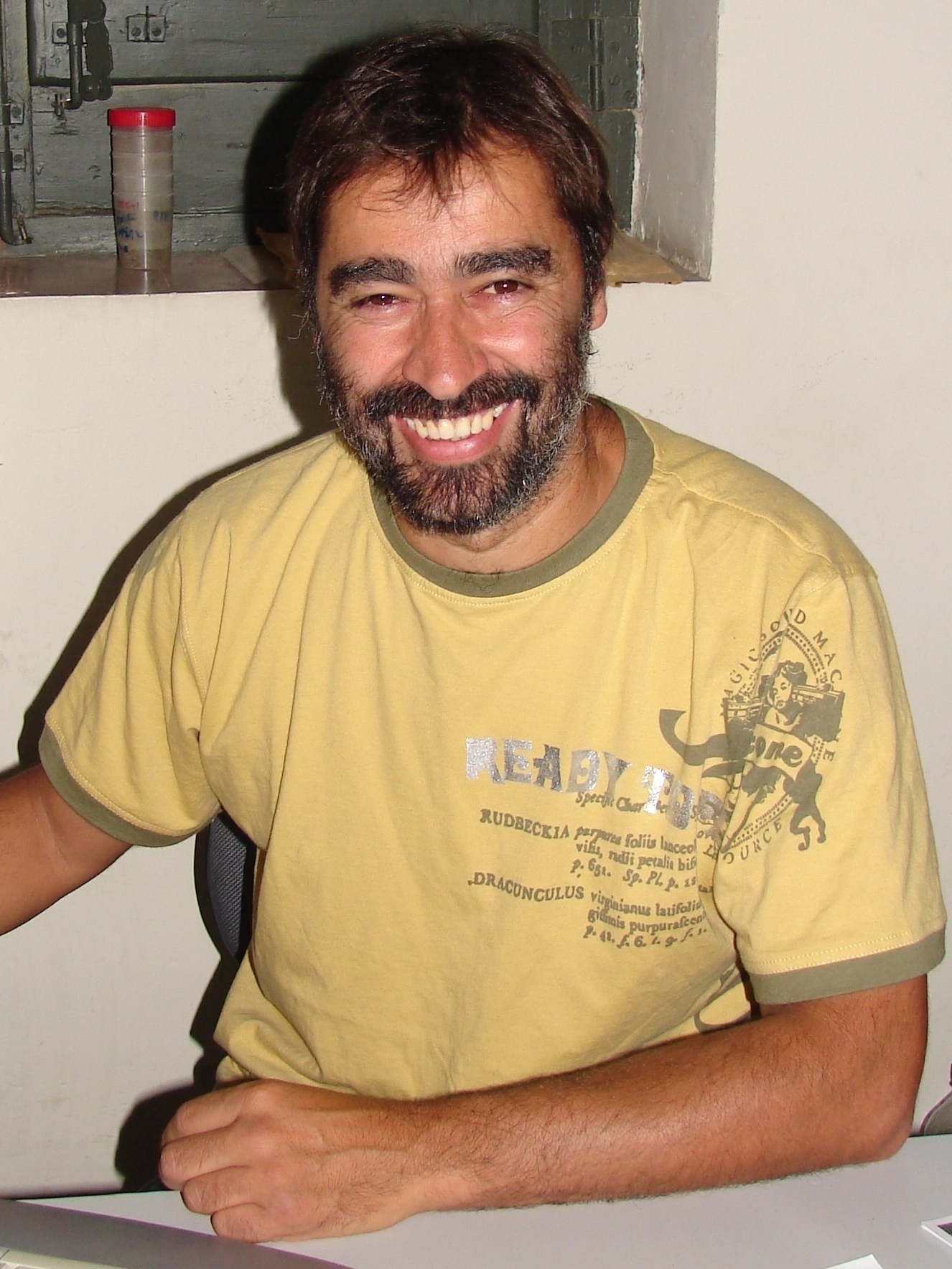
Dr. Pere Casals Tortras.
Certification of scientific productivity and science and transfer activity for the program I3 (Agencia Nacional de Evaluación)
Specialist in plant and soil relationships in agrosilvopastoral systems. With a background in plant and soil sciences, I have a PhD in the University of Barcelona addressing plant and soil N dynamics after prescribed fires. Broad experience in studying soil nutrient cycling and organic matter changes as affected by fire and afforestation. Skills using 13C, 14C and 15N as a soil and plant tracers and soil C fractionation. Involved in research projects assessing the effects forest management, land-use and climate changes on plant and soil relationships.
In order to contribute to a sustainable management of agrosilvopastoral systems, my research interest focuses on the effects of management derived perturbations (i.e. prescribed fires, grazing) or land use and climate stresses (i.e. land abandonment, drought, temperature increase) on plant dynamics, nutrient cycling and organic C stocks and fluxes. At the present I am full-time researcher at the Forest Sciences Centre of Catalonia, working to contribute to the comprehensive understanding of burning-driven mechanisms that determine functional shrub composition and structure and key components of soil.
Selected Papers:
Casals P, Valor T, Rios A I, Shipley B. 2018 Leaf and bark functional traits predict resprouting strategies of understory woody species after prescribed fires. For.Ecol.Manage. 429, 158-174.
Casals P, Rios AI. 2018. Burning intensity and low light availability reduce resprouting ability and vigor of Buxus sempervirens L. after clearing. Sci. Total Environ. 627c, 403-416
Casals P, Valor T, Besalú A, Molina-Terrén D 2016. Understory fuel load and structure eight to nine years after prescribed burning in Mediterranean pine forests. For. Ecol. Manage. 362, 156-168
Casals P, Lopez-Sangil L, Carrara A, Gimeno C, Nogués S, 2011. Autotrophic and heterotrophic contributions to short-term soil CO2 efflux following simulated summer precipitation pulses in a Mediterranean dehesa. Global Biogeochemical Cycles, 25, GB 3012, doi:10.1029/2010GB003973
Casals P, Garcia-Pausas J, Montané F, Romanyà J, Rovira P, 2010. Root decomposition in grazed and abandoned Mediterranean and mountain grasslands estimated by standard labelled roots. Agriculture, Ecosystems and Environment, 139: 759-765
Casals P, Baiges T, Bota G, Chocarro C, de Bello F, Fanlo R, Sebastià MT, Taull M. 2009. Silvopastoral systems in the Northeastern Iberian Peninsula. A Multifunctional Perspective. In: Rigueiro-Rodríguez A, McAdam JH, Mosquera-Losada MR (Eds) Agroforestry in Europe: Current Status and Future Prospects. Springer-Berlag. ISBN 978-1-4020-8271-9, Cap. 9, pp. 161-181
Casals P, Gimeno C, Carrara A, Lopez-Sangil L, Sanz MJ. 2009. Soil CO2 efflux and extractable organic carbon fractions under simulated precipitation events in a Mediterranean Dehesa. Soil Biology and Biochemistry, 41: 1915-1922.
Casals P, Romanya J, Vallejo VR 2005. Short-term N2 fixation by legume seedlings and resprouts after fire in Mediterranean old-fields. Biogeochemistry, 76(3) : 477- 501
The post Pere Casals first appeared on Ecology and management of silvopastoral systems.
]]>The post Gestió de pastures emmatades mitjançant focs prescrits o estassada (Restoration of encroached mountain pastures using prescribed burnings or mechanical clearing) first appeared on Ecology and management of silvopastoral systems.
]]>
Finançament: Conselleria d’Agricultura, Ramaderia, Pesca i Medi Natural Generalitat de Catalunya
Duració: 2012– 2013.

The post Gestió de pastures emmatades mitjançant focs prescrits o estassada (Restoration of encroached mountain pastures using prescribed burnings or mechanical clearing) first appeared on Ecology and management of silvopastoral systems.
]]>The post Land use and climate changes effects on plant and soil C and N dynamics first appeared on Ecology and management of silvopastoral systems.
]]> Soil is the major terrestrial reservoir of C. In spite of its obvious importance, there is a lack of knowledge about how climate change and land-use change interactions affect carbon cycle. The aim of this research line is to contribute to assess the vulnerability of soil carbon stocks in silvopastoral systems, by means of understand the mechanisms underlying soil carbon processes under different land uses and climatic change scenarios.
Related Projects:
CronoCarb. Captura de carbono en suelos agricolas reforestados: estabilizacion del C capturado por proteccion fisica. Ministerio de Educación y Ciencia. 2010-2013
GHG-Europe. Greenhouse gas management in European land use systems. European Comission. EU-RTD integrated project. VII FP. 2010-2013.
VULCA. Vulnerabilidad del C edáfico al cambio climático y de uso del suelo en ecosistemas pastorales: Efectos del cambio en el régimen de precipitación en pastos abandonados o quemados. Ministerio de Educación y Ciencia. 2006-2008.
Selected related papers are:
Garcia-Pausas J, Romanyà J, Montané F, Ríos A, Taull M., Rovira P, Casals P, 2017. Are soil carbon stocks in mountain grasslands compromised by land-use changes?. In Jordi Catalan, Josep Mª Ninot, Merce Aniz (Eds.) High Mountain Conservation in a Changing World. Advances in Global Change Research. Springer Open 9, pp. 207 -230.
Casals P, Lopez-Sangil L, Carrara A, Gimeno C, Nogués S, 2011. Autotrophic and heterotrophic contributions to short-term soil CO2 efflux following simulated summer precipitation pulses in a Mediterranean dehesa. Global Biogeochemical Cycles, 25, GB 3012, doi:10.1029/2010GB003973
Casals P, Garcia-Pausas J, Montané F, Romanyà J, Rovira P, 2010 Root decomposition in grazed and abandoned Mediterranean and mountain grasslands estimated by standard labelled roots. Agriculture, Ecosystems and Environment, 139, 759-765
Rovira P, Rovira R. 2010. Mathematical description of litter decomposition: Towards a generalised exponential approach. Geoderma, 155: 329-343.
Rovira P, Jorba M, Romanyà J. 2010. Active and passive organic matter fractions in Mediterranean forest soils. Biology and Fertility of Soils, 46, 355-369.
Duguy B, Rovira P, 2010. Differential thermogravimetry and differential scanning calorimetry of soil organic matter in mineral horizons: effects of wildfires and land use. Organic Geochemistry, 41, 742-752.
Casals P, Gimeno C, Carrara A, Lopez-Sangil L, Sanz MJ. 2009. Soil CO2 efflux and extractable organic carbon fractions under simulated precipitation events in a Mediterranean Dehesa. Soil Biology and Biochemistry, 41: 1915-1922.
Reichstein M., Rey A., Freibauer A., Tenhunen J., Valentini R., Banza J., Casals P., Cheng Y., Grünzweig J.M., Irvine J., Joffre R., Law B.E., Loustau D., Miglietta F., Oechel W., Ourcival J.M., Pereira J.S., Peressotti A., Ponti F., Qi Y., Rambal S., Rayment M., Romanya J., Rossi F., Tedeschi V., Tirone G., Xu M. Yakir D. 2003. Modelling temporal and large-scale spatial variability of soil respiration from soil water availability, temperature and vegetation productivity indices. Global Biogeochemical Cycles, 17(4), 15-11 – 15-15
Coûteaux M.M., Bottner P., Anderson J.M., Berg B., Bolger T., Casals P., Romanyà J., Thiéry J.M., Vallejo V.R. 2001. Decomposition of 13C labelled standard plant material in a latitudinal transect of European coniferous forests: Differential impact of climate on the decomposition of soil organic mater compartments. Biogeochemistry, 54: 147-170
The post Land use and climate changes effects on plant and soil C and N dynamics first appeared on Ecology and management of silvopastoral systems.
]]>The post Shrubland management strategies to maximize multiple ecosystem functions and services first appeared on Ecology and management of silvopastoral systems.
]]> Understory shrubs play an important role in forest functioning as they may compete with overstory trees for soil resources and increase the risk of fire propagation. Moreover, shrub encroachment into grassland may decrease pastoral value and increase fire hazard to surrounding forests. However, shrubs may have value as a fodder resource or alternative biomass energy, and shrub formations may have non-marketable values as C sinks or biodiversity hot-spots. Thus, forest managers are increasingly interested to develop strategies to manage the multifunctional benefits of these formations in a context of global change. Management for all these goods and services simultaneously may require tradeoffs in most cases. This research aims to contribute to provide knowledge and tools for the management strategies and decision process. The overall aim of this research is to gain knowledge on shrub responses and effects on soil and ecosystem function after disturbances caused by these different management activities. Specifically, this research line addresses the following objectives:
– To determine the mechanistic drivers of the response of different functional shrub types to management disturbances
– To understand the trade-offs between different management techniques and shrub formations
– To estimate how contrasting management practices affect ecosystem function, including pastoral value and soil fertility
– To define key processes for modelling ecosystem changes associated to different management options
Related Projects:
Forest Understory Prescribed Burnings: Effectiveness and Constraints (ForBurn). Ministerio de Ciencia y Economía (MINECO). AGL2012-40098-CO3-00. 2013-1015.
GHG-Europe. Greenhouse gas management in European land use systems. European Comission. EU-RTD integrated project. VII FP. 2010-2013.
VULCA. Vulnerabilidad del C edáfico al cambio climático y de uso del suelo en ecosistemas pastorales: Efectos del cambio en el régimen de precipitación en pastos abandonados o quemados. Ministerio de Educación y Ciencia. 2006-2008.
Selected related papers are:
Valor T, González-Olabarria JR, Piqué M, Casals P. 2017. The effects of burning season and severity on the mortality over time of Pinus nigra ssp. salzmannii (Dunal) Franco and P. sylvestris L. For. Ecol. Manage. doi:10.1016/j.foreco.2017.08.027
Casals P, Valor T, Besalú A, Molina D. 2016. Understory fuel load and structure eight to nine years after prescribed burning in Mediterranean pine forests. For. Ecol. Manage. 362,156-168
Montané F, Casals P, Dale MRT, 2011. How spatial heterogeneity of cover affects patterns of shrub encroachment into mesic grasslands. PLoS ONE, in press.
Martí-Roura M, Casals P, Romanyà J, 2011. Temporal changes in soil organic C under Mediterranean shrublands and grasslands: Impact of fire and drought. Plant and Soil, 338, 289-300 doi: 10.1007/s11104-010-0485-0
Montané F, Romanyà J, Rovira P, Casals P. 2010. Aboveground litter quality changes may drive soil organic carbon increase after shrub encroachment into mountain grasslands. Plant and Soil, 337, 151-165. Doi: 10.1007/s11104-010-0512-1
Montané F, Casals P, Dale MRT. 2010. Spatial patterns of shrub encroachment in neighbouring grassland communities in the Pyrenees: floristic composition heterogeneity drives shrub proliferation rates. Plant Ecology, 211, 267-278 Doi: 10.1007/s11258-010-9788-8
Montané F, Casals P, Taull M, Lambert B, Dale M R T, 2009. Spatial patterns of shrub cover after different fire disturbances in the Pyrenees. Annals of Forest Science, 66:612
Casals P, Romanya J, Vallejo VR 2005. Short-term N2 fixation by legume seedlings and resprouts after fire in Mediterranean old-fields. Biogeochemistry, 76(3): 477- 501
Romanyà J, Casals P, Vallejo VR 2001. Short-term effects of fire severity on soil nitrogen availability in Mediterranean grasslands and shrublands growing in old fields. Forest Ecology and Management, 147: 39- 53
The post Shrubland management strategies to maximize multiple ecosystem functions and services first appeared on Ecology and management of silvopastoral systems.
]]>The post VULCA. Vulnerability of soil carbon in front of Global Change in grassland ecosystems: Effects of changes in rainfall regime in abandoned or burnt grasslands. Ministerio de Educación y Ciencia. 2006-2008. first appeared on Ecology and management of silvopastoral systems.
]]>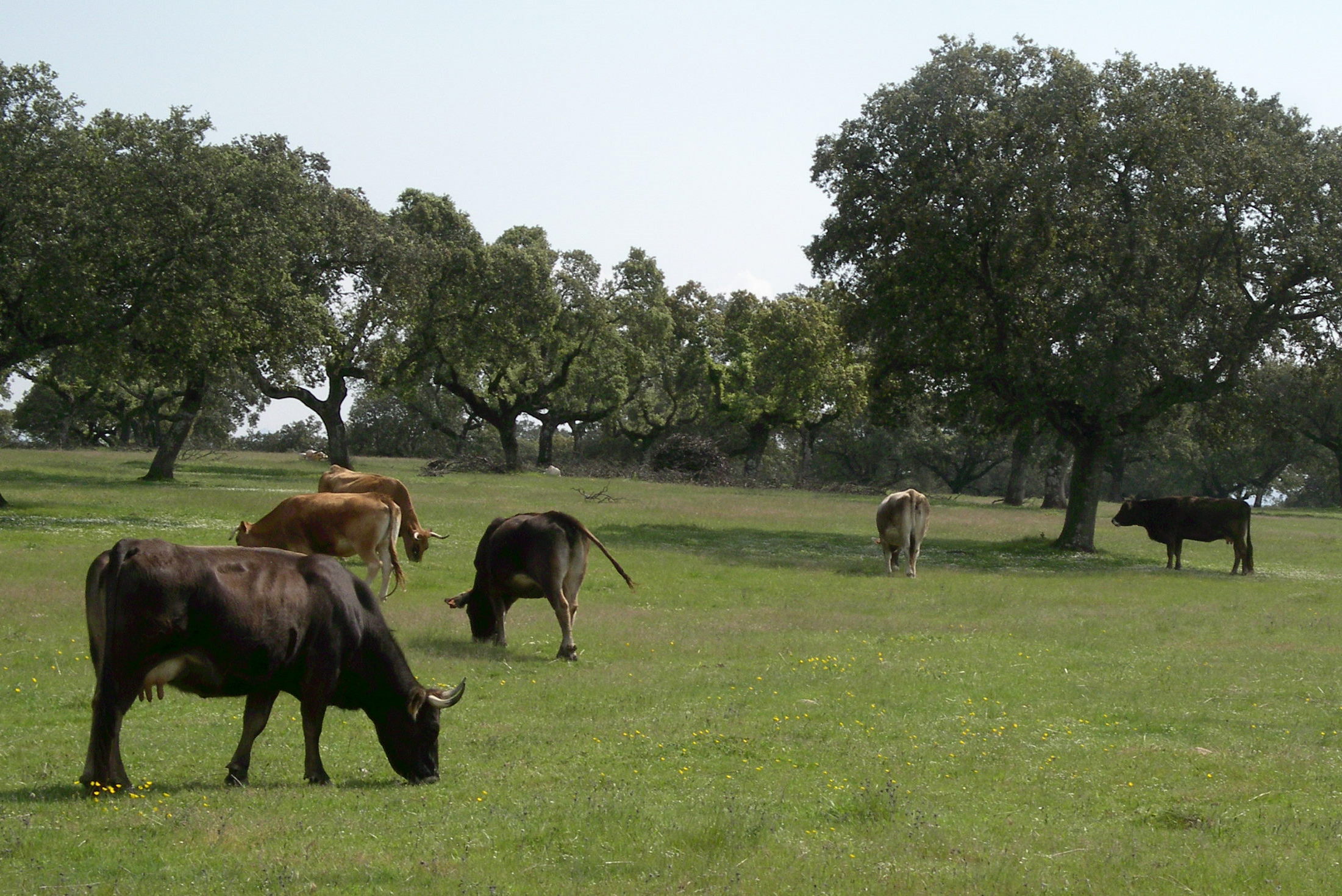 Title: VULCA. Vulnerabilidad del C edáfico al cambio climático y de uso del suelo en ecosistemas pastorales: Efectos del cambio en el regimén de precipitación en pastos abandonados o quemados.
Funding Agency: Ministerio de Educación y Ciencia
Participating organizations: CEAM, UV
Duration: 2006-2008
PI: Casals P
Subproject Researchers: Rovira P; Montané, F; Lopez-Sangil, L.
The aim of the project is to study the vulnerability of soil carbon in grassland systems, by means of studying the changes in soil carbon processes under different land uses and under Climatic Change scenarios. To do this, the project includes 3 sub-projects, designed to study fluxes of carbon in soil-plant systems (sub-project 1), fluxes between the ecosystem and the atmosphere (sub-project 2) and its extrapolation to a landscape scale (sub-project 3).
The objectives of the coordinated project are:
1. To measure how relevant are in the carbon cycle of grasslands the abiotic factors (temperature and humidity) and the biotic factors (plant biomass, organic matter quality).
2. To estimate the carbon fluxes to the atmosphere, to the passive fractions of soil organic matter, or to soluble C (DOC), as affected by changes in the rainfall regime, fires or land abandonment.

Related Papers:
Montané F, Casals P, Dale MRT, 2011. How spatial heterogeneity of cover affects patterns of shrub encroachment into mesic grasslands. PLoS ONE, in press.
Casals P, Lopez-Sangil L, Carrara A, Gimeno C, Nogués S, 2011. Autotrophic and heterotrophic contributions to short-term soil CO2 efflux following simulated summer precipitation pulses in a Mediterranean dehesa. Global Biogeochemical Cycles, 25, GB 3012, doi:10.1029/2010GB003973
Lopez-Sangil L, Rousk J, Wallander H, Casals P, 2011. Microbial growth measurements reveal that land-use abandonment promotes a fungal dominance of SOM decomposition in grazed Mediterranean ecosystems. Biology and Fertility of Soils, 47, 129–138 doi: 10.1007/s00374-010-0510-8
Casals P, Garcia-Pausas J, Montané F, Romanyà J, Rovira P, 2010 Root decomposition in grazed and abandoned Mediterranean and mountain grasslands estimated by standard labelled roots. Agriculture, Ecosystems and Environment, 139, 759-765
Montané F, Romanyà J, Rovira P, Casals P. 2010. Aboveground litter quality changes may drive soil organic carbon increase after shrub encroachment into mountain grasslands. Plant and Soil, 337, 151-165. Doi: 10.1007/s11104-010-0512-1
Montané F, Casals P, Dale MRT. 2010. Spatial patterns of shrub encroachment in neighbouring grassland communities in the Pyrenees: floristic composition heterogeneity drives shrub proliferation rates. Plant Ecology, 211, 267-278 Doi: 10.1007/s11258-010-9788-8
Casals P, Gimeno C, Carrara A, Lopez-Sangil L, Sanz MJ. 2009. Soil CO2 efflux and extractable organic carbon fractions under simulated precipitation events in a Mediterranean Dehesa. Soil Biology and Biochemistry, 41: 1915-1922.
Montané F, Casals P, Taull M, Lambert B, Dale M R T, 2009. Spatial patterns of shrub cover after different fire disturbances in the Pyrenees. Annals of Forest Science, 66:612
Montané F, Rovira P, Casals P. 2007. Shrub encroachment into mesic mountain grasslands in the Iberian peninsula: Effects of plant quality and temperature on soil C and N stocks. Global Biogeochemical Cycles, 21, doi:10.1029/2006GB002853
The post VULCA. Vulnerability of soil carbon in front of Global Change in grassland ecosystems: Effects of changes in rainfall regime in abandoned or burnt grasslands. Ministerio de Educación y Ciencia. 2006-2008. first appeared on Ecology and management of silvopastoral systems.
]]>The post Ordenació de pastures de muntanya: tipificació i potencial d’aprofitament ramader first appeared on Ecology and management of silvopastoral systems.
]]> Any: 2011
Finançament: Dept. Agricultura, Ramaderia, Pesca, Alimentació i Medi Natural. Generalitat de Catalunya
Resultats: claus per a la determinació d’una tipologia de pastura. Producció, valor pastoral i valor bromatològic de diferents tipologies de pastures. Determinació de l’oferta farratgera de les pastures.
The post Ordenació de pastures de muntanya: tipificació i potencial d’aprofitament ramader first appeared on Ecology and management of silvopastoral systems.
]]>The post Francesc Montané first appeared on Ecology and management of silvopastoral systems.
]]> Francesc Montané Caminal. PhD.
Current address: Department of Microbiology & Plant Biology, University of Oklahoma, USA
His research focuses on global change-induced changes in structure and function of ecosystems, including C sequestration and spatial patterns.
Selected papers:
Montané F, Romanyà J, Rovira P, Casals P 2013. Mixtures with grass litter may hasten shrub litter decomposition after shrub encroachment into mountain grasslands. Plant and Soil , 368 (1-2), 459-469
Montané F, Casals P, Dale MRT, 2011. How spatial heterogeneity of cover affects patterns of shrub encroachment into mesic grasslands. PLoS ONE, 6, e28652
Montané F, Romanyà J, Rovira P, Casals P, 2010. Aboveground litter quality changes may drive soil organic carbon increase after shrub encroachment into mountain grasslands. Plant and Soil , 337:151-165.
Montané F, Casals P, Taull M, Lambert B, Dale MRT, 2010. Spatial patterns of shrub encroachment in neighbouring grassland communities in the Pyrenees: floristic composition heterogeneity drives shrub proliferation rates. Plant Ecology, 211:267-278.
Montané F, Casals P, Taull M, Lambert B, Dale MRT, 2009. Spatial patterns of shrub cover after different fire disturbances in the Pyrenees. Annals of Forest Science, 66: 612.
Montané F, Rovira P, Casals P, 2007. Shrub encroachment into mesic mountain grasslands in the Iberian peninsula: effects of plant quality and temperature on soil C and N stocks. Global Biogeochemical Cycles, 21: GB4016.
The post Francesc Montané first appeared on Ecology and management of silvopastoral systems.
]]>The post GHG-Europe. Greenhouse gas management in European land use systems. European Comission. EU-RTD integrated project. VII FP. 2010-2013. first appeared on Ecology and management of silvopastoral systems.
]]> Title: Greenhouse gas management in European land use systems. GHG-Europe. FP7-ENV-2009-1.
Funding Agency: European Comission. EU-RTD integrated project. VII FP
Participating organizations: CTFC; CEAM between others
Duration: 2010-2013.
PI: Dr. Annette Freibauer, Johann Heinrich von Thünen Institute (VTI), Germany
Subproject Researchers: Casals P.; Rovira P; Romanyà J; Lopez-Sangil, L; Montané F; Martí-Roura, M.
Web address: http://www.ghg-europe.eu/.
Summary: The GHG-Europe project aims to improve our understanding and capacity for predicting the European terrestrial carbon and greenhouse gas budget. In the view of climate change it is crucial to know the amount of GHGs released into the atmosphere by anthropogenic activities. But also natural drivers such as climate variability influence the GHG balance of European ecosystems. The objective of WP2 (Critical processes), is to provide full C and CO2, N2O and CH4 (GHG) budgets of European major ecosystem types at annual to decadal time scales and to quantify the response and vulnerability of terrestrial ecosystems to anthropogenic and natural drivers focusing on critical processes for GHG fluxes based on best available observational evidence. Process studies that utilize long-term C and GHG observations, ecosystem manipulations, factorial experiments and gradients of climate, land use and management intensity will elucidate the reaction of C and GHG processes to changes in anthropogenic and natural drivers.
Shrublands cover large parts of the Mediterranean with considerable enlargement in some regions by woody encroachments but this ecosystem has been completely ignored in the European C bugdet (Schulze et al. 2008) although it may act as a significant C sink (Pacala et al. 2001). Our research activity (Task 2.6) focus on provide data and process understanding of Mediterranean shrubland management and woody encroachment dynamics for a better representation of shrublands in process-based models for European GHG balances.
Related Papers:
Casals P, Lopez-Sangil L, Carrara A, Gimeno C, Nogués S, 2011. Autotrophic and heterotrophic contributions to short-term soil CO2 efflux following simulated summer precipitation pulses in a Mediterranean dehesa. Global Biogeochemical Cycles, 25, GB 3012, doi:10.1029/2010GB003973
Martí-Roura M, Casals P, Romanyà J, 2011. Temporal changes in soil organic C under Mediterranean shrublands and grasslands: Impact of fire and drought. Plant and Soil, 338, 289-300 doi: 10.1007/s11104-010-0485-0
Lopez-Sangil L, Rousk J, Wallander H, Casals P, 2011. Microbial growth measurements reveal that land-use abandonment promotes a fungal dominance of SOM decomposition in grazed Mediterranean ecosystems. Biology and Fertility of Soils, 47, 129–138 doi: 10.1007/s00374-010-0510-8
Casals P, Garcia-Pausas J, Montané F, Romanyà J, Rovira P, 2010 Root decomposition in grazed and abandoned Mediterranean and mountain grasslands estimated by standard labelled roots. Agriculture, Ecosystems and Environment, 139, 759-765
Montané F, Romanyà J, Rovira P, Casals P. 2010. Aboveground litter quality changes may drive soil organic carbon increase after shrub encroachment into mountain grasslands. Plant and Soil, 337, 151-165. Doi: 10.1007/s11104-010-0512-1
Montané F, Casals P, Dale MRT. 2010. Spatial patterns of shrub encroachment in neighbouring grassland communities in the Pyrenees: floristic composition heterogeneity drives shrub proliferation rates. Plant Ecology, 211, 267-278 Doi: 10.1007/s11258-010-9788-8
The post GHG-Europe. Greenhouse gas management in European land use systems. European Comission. EU-RTD integrated project. VII FP. 2010-2013. first appeared on Ecology and management of silvopastoral systems.
]]>